
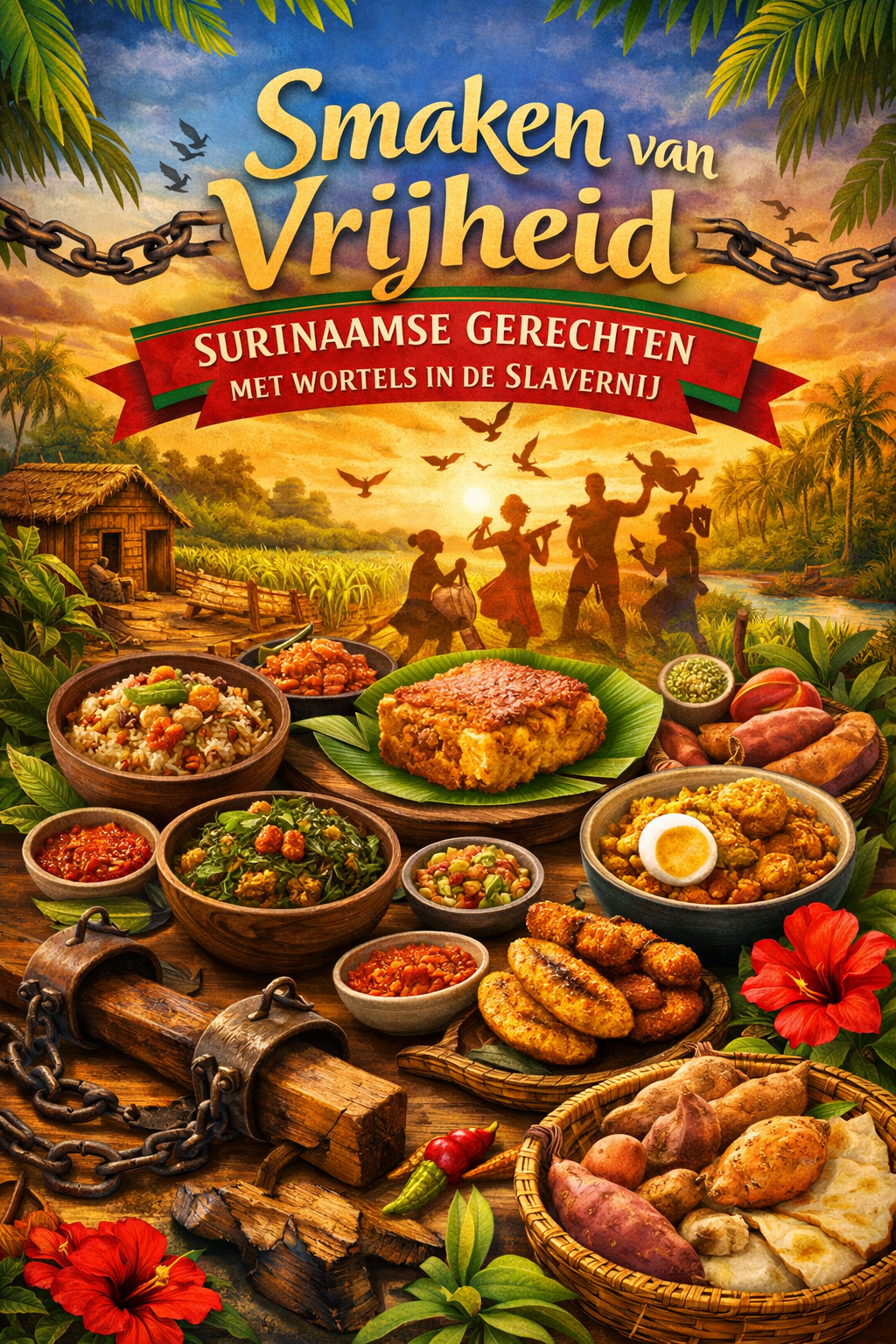
Food carries history. The Surinamese kitchen as we know it — colourful, fiery, full of contrasts — was largely born in the slave barracks and small kitchen gardens of the colonial plantations. Enslaved Africans turned the scraps they were given and the produce of their own tiny garden plots into a cuisine that is now celebrated worldwide.
Background: food on the plantation
Plantation owners issued meagre rations: cassava meal, hard bread, sometimes salted fish or salted pork. Whoever wanted real food had to grow or catch it themselves on the small kostgrondjes (kitchen gardens). On those plots cassava, yams, okra, peppers, taro, sweet potato and bananas were grown — and from them, an entire cuisine emerged.
The dishes and their stories
Pom — a celebration dish from a wheat-poor era
Pom is built on grated pomtajer (a tropical tuber) layered with smoked chicken and citrus. Sephardic Jews who arrived in seventeenth-century Suriname created it as a kosher alternative to a wheat dish; enslaved cooks adopted it and made it their own. Today it is the dish of birthdays, weddings — and of Keti Koti, the day commemorating the abolition of slavery (1 July 1863).
Peanut soup (pindasup)
Peanuts came with enslaved Africans via Brazil. West-African traditions of pounded peanut stews evolved in Suriname into a thick, savoury soup with smoked meat or fish, plantain dumplings (tom-tom) and madame jeanette peppers. Today it is the symbolic dish of reconciliation: at Keti Koti gatherings it is shared so that “no-one commemorates on an empty stomach.”
Heri-heri — the garden plot on one plate
Literally “things-things”: a mix of everything the kitchen garden produced. Boiled cassava, sweet potato, taro and green banana served with salted cod (bakkeljauw) or smoked fish. From a survival meal it became the proud Keti Koti breakfast — heavy, nourishing, made to power a working day.
Pepre-watra — “pepper water” of the interior
A clear, fiery fish broth refined by Maroon communities deep in the rainforest. Light, sharp, often eaten with cassava bread. The heat is not fashion but preservation: in the tropics, well-spiced food spoils less quickly.
Okra and other West-African crops
Okra arrived as seeds smuggled in hair braids and clothing on the slave ships. It grew well in Suriname and entered thick stews reminiscent of Nigerian okra soup, combined with salted meat or seafood.
The Keti Koti plate today
On 1 July, families across Suriname and the Surinamese diaspora set tables that literally cook history: heri-heri with bakkeljauw for breakfast, peanut soup with tom-tom for lunch, and pom as the celebration dinner. Bojo or fyadyo with coffee. Every bite is a memory, a tribute and a celebration.
A living heritage
The Surinamese kitchen keeps absorbing influences — Hindustani roti and curry, Chinese tjap-tjoi, Javanese saoto soup and nasi. But its Afro-Creole foundation, born of the harshest circumstances, remains the heart of what we today call “Surinamese food”. To taste pom or peanut soup is to taste creativity under coercion and the quiet resistance of people who, despite everything, made something beautiful.
— Stichting Suriname Global Group


